Welcome to our home as married Peace Corps education volunteers in Uganda! This MTV-style Cribs video was filmed by our friend and fellow PCV, Matthew Dahlberg, with special guest appearances by more friends/fellow PCVs, Carmen and Amanda.
Showing posts with label life. Show all posts
Showing posts with label life. Show all posts
Tuesday, July 21, 2015

Monday, July 6, 2015
When Help Is a Four-Letter Word
I’ve gotten into the habit of locking the door and drawing
the curtains whenever I get home. In the recesses of my house, cut off from the
world, I’ve begun to consider the vastly complex issue of a deceptively simple
word – “help.” I never realized it before, but as a society, we attach so many
intense labels to the word help. The truly astounding part is that which label we
choose to use depends on the context of the word – if the help is being given
or received. In general, if we think of help in terms of being given, it is
almost sanctified. It is a virtue to aspire to, a holy, spiritual quality of
someone good and pure and admirable. If we think of help in terms of it being
received, that picture changes. We associate the word with a sense of pity
instead; needing help is something almost shameful, an issue that we distance
ourselves from with images of homeless vets in soup kitchens or barefoot
children in Africa . But on either end of the
word, the labels attached to help are toxic and untrue. We’ll always fall when
we put ourselves on pedestals of self-righteousness and, if we attach judgment
to receiving help, we’ll also, however unconsciously, attach judgment to giving
it. Help needs to come from a place of empathy, not pity.
We need to be able to acknowledge our own dark places, our
own imperfections, and allow others to see them - we need to be able to receive
help in order to give it. This is the journey that I’m on now. When you don’t
want to think of yourself as the receiver, it’s so easy to shut yourself off
from everyone else trying to help – hit silent when the phone rings, neglect
your inbox, put in your headphones when someone’s knocking at the door. But I have started to realize that when I
close my door to others, when I don’t let them in, I can’t get out either. That
closed door is not a one-way barrier to help. One of the most important things
I’m learning here is how to keep my door open, to ask for help, however small,
without shaming myself for getting it or telling myself that next time I’ll be
able to get through it alone. Because I’m not alone. We’re not alone. No one is
meant to make it through this world by themselves. Not reaching out to your
family, your friends, your community, or health care professionals doesn’t make
you strong, doesn’t make you tough, and certainly doesn’t make you better. In
fact, it almost makes you stupid, and it does make it harder for you to reach
out to others in an effective manner. I tried to make my life about helping
without even realizing that I shrank from applying that word to myself as a
receiver – and I don’t think I’m the only one. In these two years of Peace
Corps, I never thought one of the most important things I’d learn in trying to
help was how to ask for it and accept it while still feeling strong,
still feeling enough, still being who I wanted to be. In order to truly be able
to help, I now know that I have to learn how to be helped.
We must relabel “help” as normal, not something that is only
required in extreme situations of poverty, natural disaster, or disease but
rather something that everyone is able to give and get constantly. In fact, we can’t
get through life without doing both. When we lock our door to others trying to
get in, when we refuse to receive help, it traps us as well, making it so much
more difficult when we want to give help to see who is on the other side and what they really need. It makes us vulnerable to keep that door open, to allow
people to see inside, but it also frees us to help and be helped. If we want to really, truly help, we have to
stop letting help define us, in one way or the other, and instead stand in our
open doorways, exposed but present.

"If we’re going to find our way back to each other,
vulnerability is going to be that path. And I know it’s seductive to stand
outside the arena and think, I’m going to go in there and kick some ass when
I’m bulletproof and when I’m perfect. And that is seductive. But the truth is
that never happens. And even if you got as perfect as you could and as
bulletproof as you could possibly muster when you got in there, that’s not what
we want to see. We want you to go in. We want to be with you and across from
you. And we just want, for ourselves and the people we care about and the
people we work with, to dare greatly."
- Brené Brown
Monday, April 20, 2015
25 Other Things Being a PCV Is Also About

25 other things that being a PCV is also about:
1) Finding
Weird Bugs


OK, not a bug, but adorable.
2) Food
(Cooking It, Eating It, Craving It, Anything At All To Do With Food)

Jackfruit, which Peace Corps legend says is the food that Juicy Fruit based its flavor on.


Making homemade cinnamon buns!


A cooking competition, Top Chef style, during one of our trainings.

Homemade potato gnocchi - when you have regular access to only four different vegetables, you start to get creative.
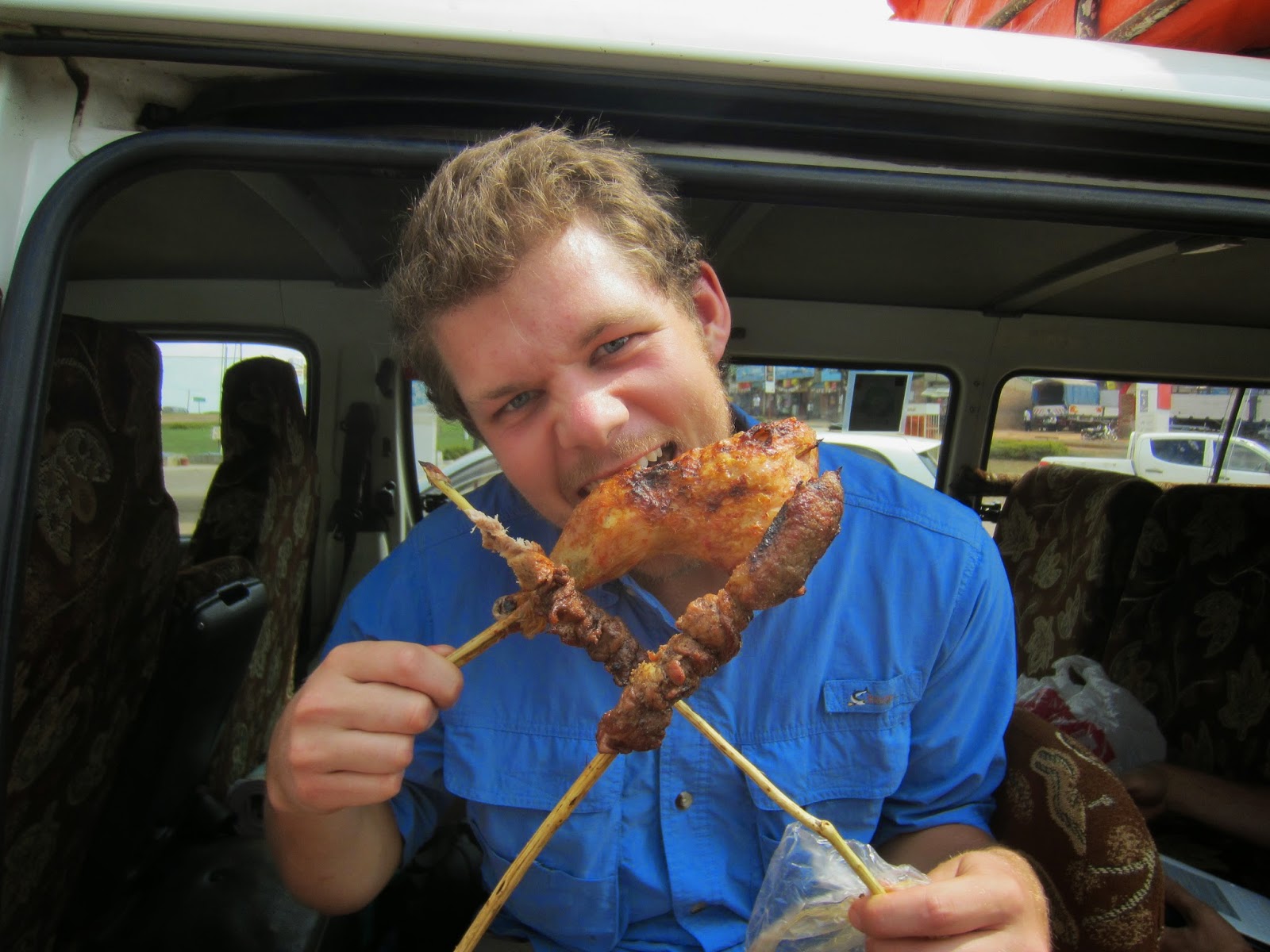
Street meat!

My ongoing list.
3) The
Most Bureaucracy Ever, Everywhere
A half hour of my last three hour-long meeting involved listening to the minutes from the previous four hour-long meeting. Also, if you don’t write down the agenda that the chairperson announces, you get the evil eye.
A half hour of my last three hour-long meeting involved listening to the minutes from the previous four hour-long meeting. Also, if you don’t write down the agenda that the chairperson announces, you get the evil eye.
4) Writing

The journals I've completed since in-country.
5) Being McGuyver

Setting up our gas stove top.


We make our own games!

Gambling chips made out of tri-colored pasta.

Five people, all their worldly possessions, and one car.

DIY stitches removal!
6) Growing
Things (Except Basil)

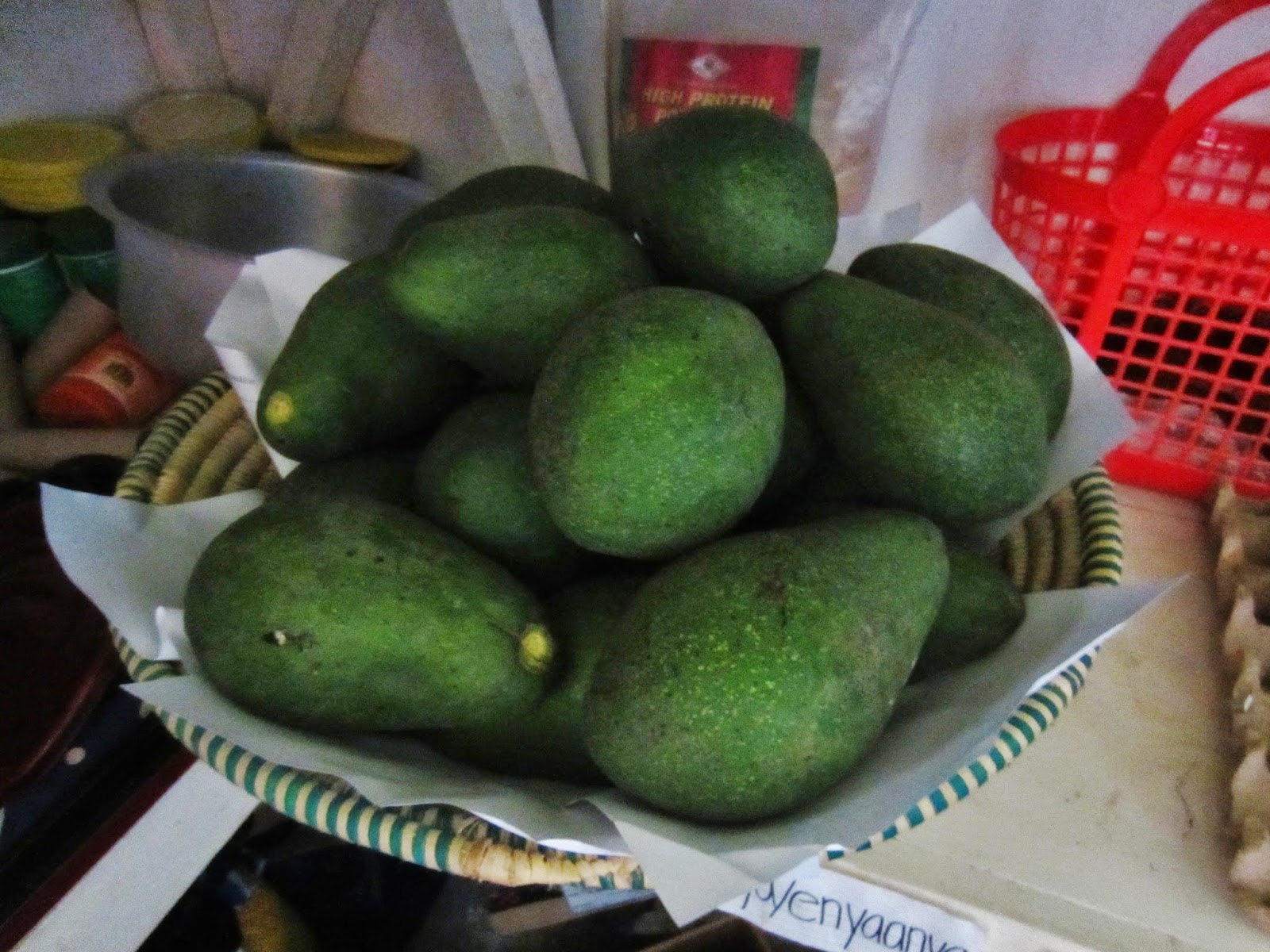
Avocados from our backyard.
7) Peace
Corps Trainings


I feel like this is a good range of emotions often found at trainings...
8) Hiding
in Your House
Privacy can be hard to come by when you live in a communal society...and when you live where you work.
Privacy can be hard to come by when you live in a communal society...and when you live where you work.
9) Making
Connections


10) Care Packages!


11) Touching
(PCVs Get Lonely, Y’All)

12) Reading

Books read in Peace Corps so far - 75.
13) Camps!


14) Watching TV


15) Cleaning Up
Dead Things and Gecko Poop
'Nough said.
'Nough said.
16) Language
Learning

17) Cups of Tea
(With More Sugar Than You Thought Possible)

18) Sitting in
Vehicles
See Travel in Uganda. After awhile, you start to look forward to the time to think. You also come to realize that your concept of personal space has completely been eradicated. In fact, it’s kind of nice on cold days.
See Travel in Uganda. After awhile, you start to look forward to the time to think. You also come to realize that your concept of personal space has completely been eradicated. In fact, it’s kind of nice on cold days.
19) Being
Confused


This is what my candy came wrapped in...
An apple a day...because an orange a day. I was tempted to give him credit.
Yep. Cow waiting to use our latrine, apparently.
20) Not Letting Other People Steal Your Camera

21) Triumph
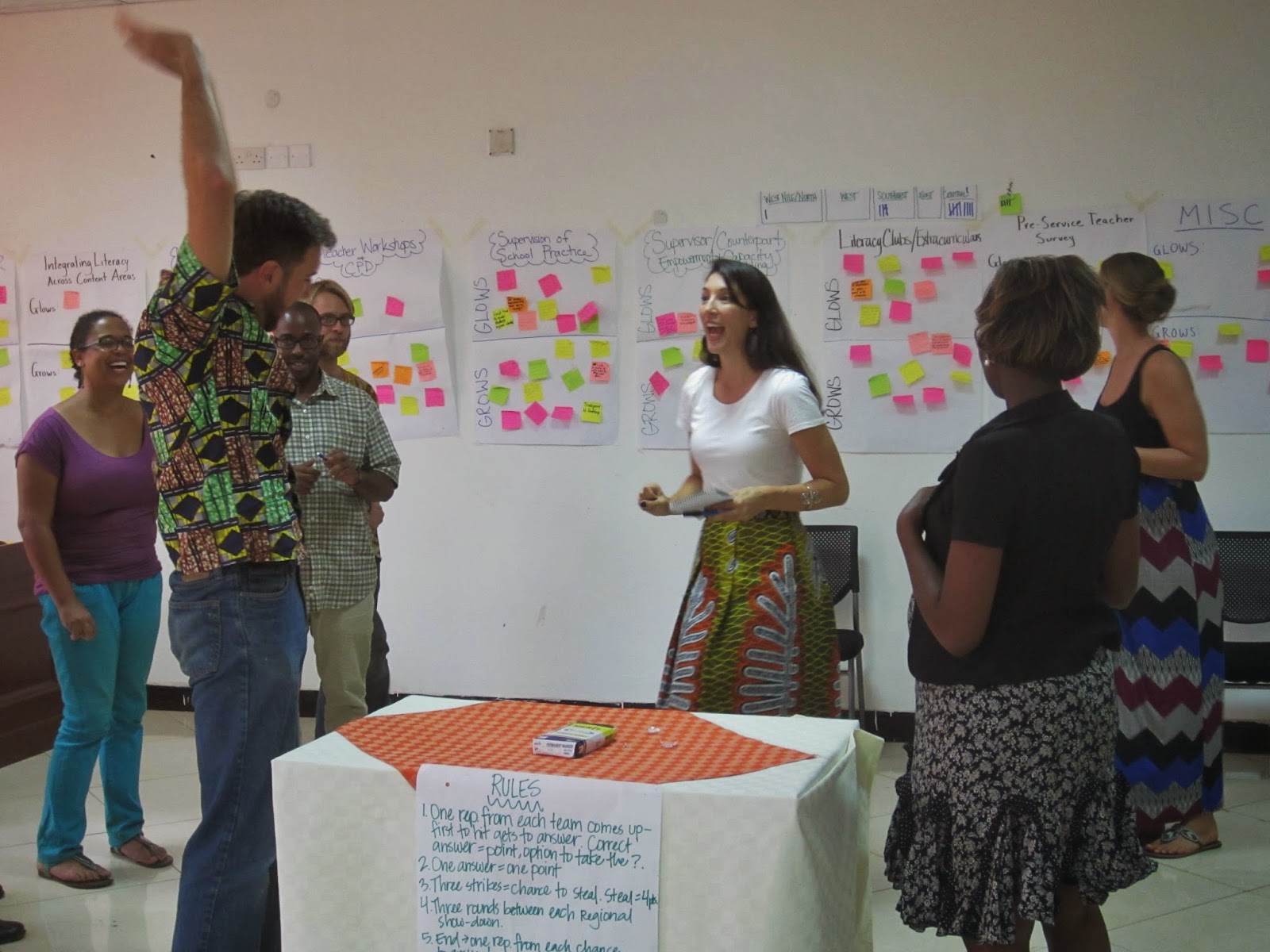
22) Defeat (Also Accompanied by Mockery)

23) Philosophizing


Salt mining at Katwe lake.


25) Always
remembering…

Subscribe to:
Posts (Atom)