Showing posts with label language. Show all posts

Saturday, July 11, 2015

The Amazing Race Comes to Bushenyi!

A new group of Health and Agriculture trainees arrived in Uganda two months ago. Like my Education cohort did, they completed their “Boot Camp” and have moved on to stay with host families for intensive language training. The Southwest group, about 9 volunteers in total who will be placed in the Runyankore/Rukiga language region, is staying in Bushenyi Town, not too far from me and Kris. They attend language classes in town six days a week and every Friday, Kris has arranged for them to compete in…The Amazing Race: Uganda! If you’re not familiar with The Amazing Race, it’s reality TV show where teams of two race around the world to complete various tasks in different countries. It also turns out to be a great concept to adapt for language learning.

Part of Peace Corps language training is known as “community experience." This involves the trainees being set free in the local area in which they are staying and told to use the language tasks that they have been learning. They are supposed to practice greeting, ordering food, haggling, finding transportation, and, of course, talking up the Peace Corps with whomever they can find. It sounds fairly simple but in reality, as any language teacher knows, that's a monumental assignment for a student, especially when they're an adult. The uncertainty, fear, and exhaustion of being in a new culture coupled with attending classes eight hours a day, six days a week means that most students are too reluctant, too nervous, or just plain too tired to take their own initiative to practice their new language in a real-world context. 

One way to combat this is to give learners more specific assignments to complete. Creating guidelines and a safe, predetermined space to practice mitigates a lot of the anxiety adult learners can feel. After all, when you’re speaking a brand new language to native speakers, you really do feel like a child again a lot of the time! Add this idea to the fact that, when you’re American, you will naturally turn these tasks into a competition, and The Amazing Race: Uganda is born. The prize? Homemade baked goods, of course, from a selection of the six I’m able to make here. There are few things a Peace Corps trainee dreams about more than food (sorry, friends and family – they still love you).

So, each week, Kris has been traveling around Bushenyi Town and speaking to our Ugandan friends, asking them to provide tasks and interact with the trainees in local language as part of the Amazing Race. In a fringe benefit that we weren't expecting, the locals have absolutely been loving it. It means a lot to them to see foreigners really making an effort to get to know who they are while caring so obviously about their language and their culture. Plus, it’s funny to see a bunch of Americans running around frantically, trying desperately to remember the word for bananas.


This week, the race came to our trading center and schools! Kris set up tasks around the area and I waited at my primary school while Kris “released” the teams five minutes apart in Bushenyi Town. They had to travel by public transportation to our trading center, complete four tasks and one detour, and then travel back again.


The first clue:
You have to haggle for almost everything here, including transport, so 10,000 shillings can go fast if you're not good at bargaining!

Second clue:
Those might have been our clothes that the trainees were washing...

Third clue:
Immaculate has actually seen the Amazing Race, so she was super excited!

After talking to Immaculate, the trainees were given a fourth clue directing them to my primary school. Upon arriving, they had to enter the Primary One or Primary Two classroom and be taught a song by the pupils and teacher. My headteacher and deputy headteacher were there to greet them when they arrived, bemusedly shaking hands and directing the sweaty Americans to the correct classroom block. 

Each class presented its own challenges and advantages. Hope, the P1 teacher, was very strict about pronunciation, but she had written down the song for the trainees and allowed them to sit in the back with the class. 


Rebecca, the P2 teacher, was less strict about pronunciation, but she wouldn't let the trainees write anything down and made them stand in front of the class to learn the words.


Such good sports!

It is a simple song that the teachers sing with the little ones when it's time to practice handwriting: 


Kampandiike gye
Kampandiike gye
Kampandiike kurungi
Ndyaba karaani!

Let me write well
Let me write well
Let me write so very well
I will be a secretary!

Its length didn't make it any less difficult to sing in front of a class, however! But with the promise of baked goods on the line, the trainees performed beautifully.

Receiving their next clue from the primary school secretary.

The last clue involved a trip to the banana stand clear at the other end of the trading center. The volunteers had to haggle the price down to a reasonable 2,000 shillings and hope that they had enough left out of their 10,000 shillings to make it back to Bushenyi Town!

The set aside items might also have been from our grocery list...

It all ended up in a sprint to the finish line between two of the four teams, with one victoriously claiming their prizes of no-bake cookies and coffee cake. Hopefully, however, everyone also left with a better understanding of how to navigate around Uganda, a greater proficiency in Runyankore, increased confidence, and some good, albeit ridiculous, memories. 

"That was fun, but it wasn't fun."
- JJ from the Amazing Race


Wednesday, October 29, 2014

My Language Spelling Bee


In Ugandan primary schools, children are taught in their local language until Primary 4, where they switch to learning in English. This “transition year,” as it is known, can be very difficult for pupils. This, coupled with the fact that being fluent in English is seen as the key to success in many areas, has led parents and communities to push for all-English classes at younger and younger ages. However, when classes are taught in English beginning at Primary 1, many pupils never become literate in their first language. This is a major detriment because skills in literacy transfer from the first language to the second language only if completely learned. As an ESL teacher, I know that the best predictor of reading proficiency in someone's second language is their level of literacy in their native language. English is important to learn, but it should not come at the expense of a child's native language. In addition to the many social, economic, and cognitive benefits first-language literacy offers, a pupil who is literate in their native language takes considerably less time to achieve competency in English. Despite all of this, an initial lack of focus on English can seem counter-intuitive to many people. This has led to a devaluing of indigenous languages in Uganda and an uncertainty about what role, if any, local languages should play in schooling.

Enter the My Language Spelling Bee (MLSB). The MLSB is a spelling competition created this year by Peace Corps Volunteers in partnership with the Ministry of Education and Sports. Pupils from different regions all over Uganda are competing this month and the next in their local languages – Acholi, Luganda, Runyankore/Rukiga, Runyoro/Rutooro, and more. The goal of MLSB is to increase the levels of literacy in Uganda, promote a love of reading and writing, and help to preserve indigenous languages. It’s a project centering around all of the causes that I am most passionate about, and I am so happy that I was able to be a small part of it in the Runyankore/Rukiga language region.


The idea of a spelling bee is a new concept here and introducing it to the community was certainly a challenge, one that earned me many “crazy muzungu” looks at first. However, after an explanation of the educational benefits of events such as this one, the strong support of local community members such as the District Education Officer and the Coordinating Centre Tutors led to my entire district embracing the idea. Over 150 schools in my area held school-level spelling bees in September. The winner of each school spelling bee traveled to their local Coordinating Centres in mid-October to compete in the district-level competitions. The top five pupils from each district competition, in addition to 12 pupils from two other districts, went on to compete in the final regional competition on October 27th, one of the best days of my service.

39 pupils, their P3 teachers, and a mix of parents and headteachers from the Southwest of Uganda arrived at Bushenyi Core Primary Teachers’ College at 10:30 a.m., some from as far as five hours away. As each pupil registered, they received the homemade registration bibs that Hannah, Kris, Codie, and I had made assembly-line style the previous day out of scrap paper, duct tape, and yarn.


While they were waiting for break tea, Paul and an amazing P3 teacher from a nearby school organized games, songs, and icebreakers for the pupils. In no time at all, pupils in uniforms of all different colors were sharing seats, running to the latrines together, and gesticulating wildly as they debated the spellings of different words.


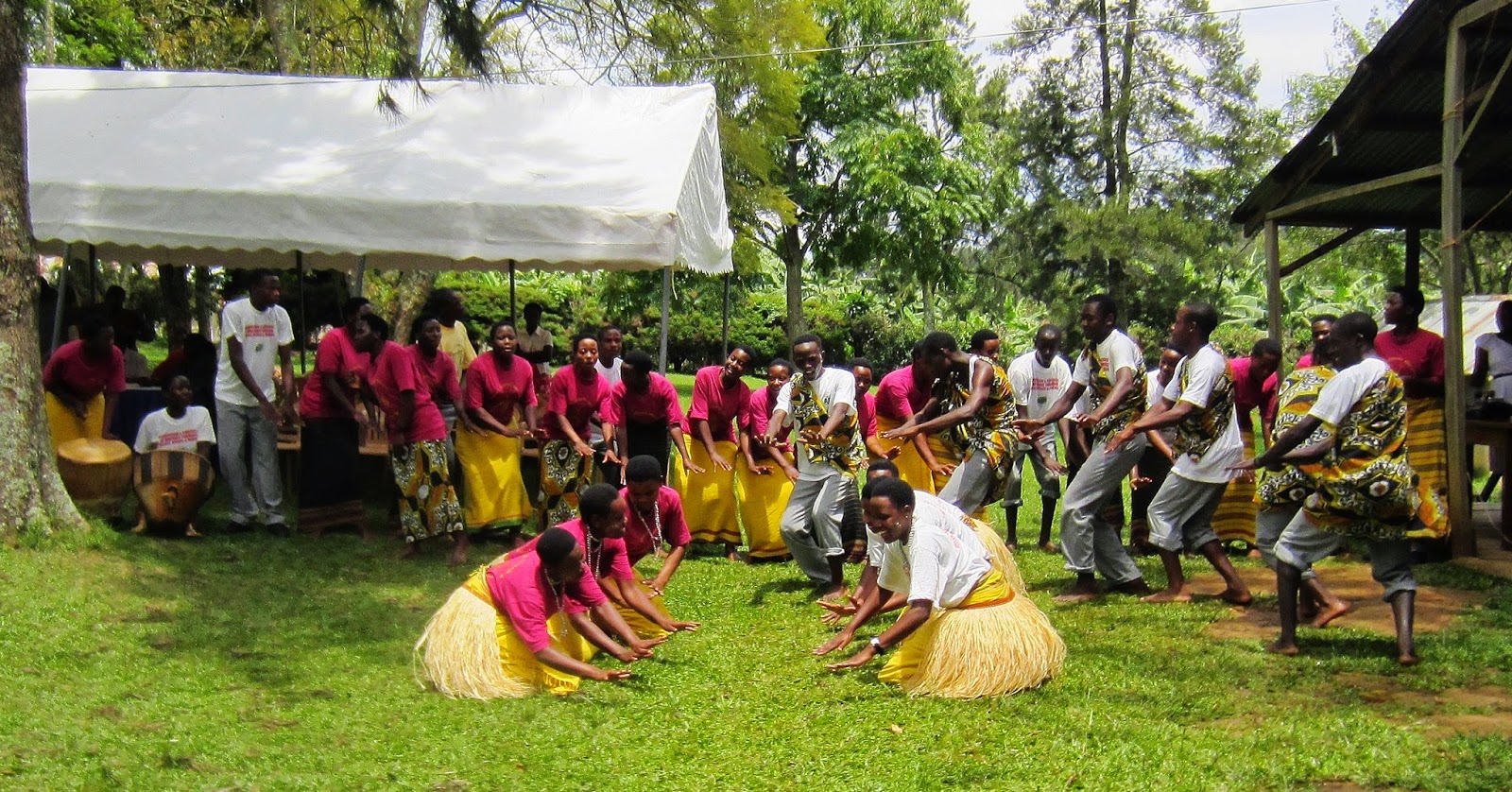
After break tea, the other PCVs and I stepped back and from there on out, it was entirely Ugandan-run. The Ugandan MC, an amazing man named Lebon, opened the competition with a prayer and the national anthem and the principal of the college and the District Education Officer gave heartfelt speeches in Runyankore. Their amplified voices, however, coupled with the rain that had begun to fall made many of the pupils' heads sink lower and lower onto their chests. But soon the rain cleared, and the entrance of the college’s Music Dance and Drama group made everyone snap back to eager attention. Many of the audience rose to their feet and began clapping and even dancing along with the group’s songs, dances, and drumbeats.


After the Music, Dance, and Drama presentation, the rules were explained and the pupils divided into two groups for a preliminary round. The schools, parents, pupils, and judges, a mix of teachers, tutors, and local language experts, were more excited and involved in the competition than I ever could have dreamed.


The children repeated words they were given silently to themselves, looks of concentration on their faces as they decided exactly how many a’s were in the middle of the word okutaaha before starting to spell. The parents and teachers actually mouthed the letters along with their pupils, giving satisfied nods and triumphant looks as their child decided that there were, in fact, two a’s. The judges smiled as they gestured successful pupils on to the next round and consulted their word lists and dictionaries seriously and often. I was struck by how much this could easily resemble a scene at a similar event anywhere around the world. An hour later, the arrival of the kitchen staff bearing giant pots of matooke and beans on their heads shattered this illusion somewhat. At the lunch break, 15 pupils were left to continue on to the final round after eating. And man, could these kids eat!


The pupils clamored in front of the serving tables for their favorites, which they so rarely get – matooke, g-nut sauce, rice, beef, "soup", and soda. Once everyone had consumed plates of food larger than their heads (the Ugandan appetite is truly remarkable), tables were placed in the middle of the two tents, the much duct-taped and only rarely on fire sound system was switched on, and the last 15 competitors, after an impromptu dance party while the judges were preparing. lined up for a series of much more difficult words.


Teachers scribbled furiously on their copies of the word lists as the children tackled words like amashémererwa, omunyongororwa, and ekiharáàni.


Soon, only two pupils were left and as competitor number 9 correctly spelled the word competitor number 2 had missed, the audience burst into applause. Gilbert, aka number 9, was swept into the arms of his teacher and handed over to the MC, who proudly declared him the winner of the first ever My Language Spelling Bee for Runyankore/Rukiga and therefore the recipient of an all-expenses paid trip to Kampala, the capital of Uganda, along with his teacher and parents.


The competition wrapped up as certificates were awarded, hands were shaken, and books in Runyankore were given to the 1st, 2nd, and 3rd place pupils. As Codie, Paul, and I took down the MLSB banner in front of the now empty tents, we couldn’t stop grinning. We had spent the whole day surrounded by excited and eager children and adults whose enthusiasm for spelling, reading, and writing surpassed anything we’ve ever seen here before. As we headed back to the house for a debriefing and well-deserved relaxation, we reminisced over our favorite moments – children clapping, smiling, and laughing during the traditional songs and dances; a parent confidently quizzing his son while they waited for the competition to begin; a headmaster with a big goofy grin waving his arms in triumph across the tent as his pupil correctly spelled an especially difficult word; a judge gently asking if a competitor understood a word and beaming when he received an affirmative answer; a group of pupils muttering letters under their breath as they watched the final children compete; a teacher making copious notes about every word for next year’s competition. 

It was a day that I will never forget, a day where I began to truly understand that we are just here to plant the seed of literacy in Uganda’s fertile soil. Her people have asked it and her people will sow it. They are ready, they are capable, and they are remarkable.


To learn to read is to light a fire; every syllable that is spelled out is a spark. 
—Victor Hugo

Sunday, July 6, 2014

Confessions of a Language Geek

After our month and a half of Peace Corps language training, a time I also refer to as heaven, Kris and I continued to study Runyankore on our own while searching for a tutor to help us. This is a more difficult task than you might imagine because simply knowing the language does not necessarily mean that person can explain it to us. For example, you might know that the sentence, “He got on the car,” is wrong but "He got on the bus" is right, yet you would probably be hard put to say why or give a concrete rule that would help your student.

Finally, after months of self-study and well-meaning tips from our Runyankore-speaking neighbors and friends (“Don’t ask ‘What?’ so quickly! Look where I pointed! At my nose! I said I have the flu! Now repeat."), we have finally found a tutor! As the first agglutinative language I have studied, advancing in Runyankore has been pretty fun.

Words can be incredibly long; for example, the three-word sentence Tindamuhandiikiire nkamugambira bugambizi means I didn't write to him, I just told him. Some of the words are also fascinating, and looking through my Runyankore/English dictionary has become a favorite pastime of mine during those long lunch hours where I can grasp about 1 out of 25 words of the staff-room conversations.

Like in many languages, a lot of the words in Runyankore relate deeply to its culture and illustrate aspects of its history and daily life of its people.

Cattle, for instance, are extremely important and valued - hence the 50-odd specific words to describe their markings, horns, and patches.

emishubyo: n. milk of a second milking
emishura-ibiba: n. night jars

For those of you wondering, night jars are what you use when you have a pit latrine and don't want to venture outside during the night.

enkundwakazi: n. favourite wife

ekikondooro:  n. lap opened for grain; piece of cloth overhanging the belt

Family relationships are also extremely important, and you must be extremely specific about how someone is related to you. Kris uses a different word for his brother than I do for my brother because he is a man and I am a woman. When I say banyaanya, for example, it means brothers, but when Kris says it, it means sisters. Irritating or fascinating? All depends on my mood.

Other words are slightly more mystifying to me and my American background…

omushuuzi: n. visitor of lonely people; one who checks on a trap

Now is this an either/or or both situation in terms of the definitions? Maybe these people are so lonely because their friends are fed up with all the traps they've been setting.

kusinda: v. be drunk; not say one's husband's name; sigh with pain, roar

Well, that certainly illustrates the diversity of the word.

kujwarirana: v. hide inside one's clothes

kugongyera: v. whimper; low; moan when dying; moan when drunk

I think we actually could have used this word in college...

And some are downright incomprehensible.

obumeeza: n. occasional tables

Huh.

And then, of course, there are some that just make me giggle.

enkooko: n. bogeys

Heheh. Bogeys.
Interestingly enough, enkoko with one o and a slightly different tone actually means chicken. This leads to unfortunate sentences such as, "I was thinking about buying some bogeys."

One of my favorites though, is this one:

okutongoza: v. to walk slowly, especially when one is in his happy moments

On my walks home from school, listening to the wind rustle through the drying leaves of the banana trees, I think about this word and take some time to enjoy the beauty and culture that surrounds me here.

"I was reading the dictionary. I thought it was a poem about everything." - Steven Wright