In Ugandan primary schools, children are taught in their
local language until Primary 4, where they switch to learning in English. This
“transition year,” as it is known, can be very difficult for pupils. This,
coupled with the fact that being fluent in English is seen as the key to
success in many areas, has led parents and communities to push for all-English
classes at younger and younger ages. However, when classes are taught in
English beginning at Primary 1, many pupils never become literate in their first
language. This is a major detriment because skills in literacy transfer from the first language to the second language only if completely learned. As an ESL teacher, I know that the best predictor of reading proficiency in someone's second language is their level of literacy in their native language. English is important to learn, but it should not come at the expense of a child's native language. In addition to the many social, economic, and cognitive benefits first-language literacy offers, a pupil who is literate in their native language takes considerably less time to achieve competency in English. Despite all of this, an initial lack of focus on English can seem counter-intuitive to many people. This has led to a devaluing of indigenous languages in Uganda and an uncertainty about what role, if any, local languages should play in schooling.
Enter the My Language Spelling Bee (MLSB). The MLSB is a spelling competition created this year by Peace Corps Volunteers in partnership with the Ministry of Education and Sports. Pupils from different regions all overUganda
are competing this month and the next in their local languages – Acholi,
Luganda, Runyankore/Rukiga, Runyoro/Rutooro, and more. The goal of MLSB is to
increase the levels of literacy in Uganda , promote a love of reading
and writing, and help to preserve indigenous languages. It’s a project
centering around all of the causes that I am most passionate about, and I am so
happy that I was able to be a small part of it in the Runyankore/Rukiga language region.
Enter the My Language Spelling Bee (MLSB). The MLSB is a spelling competition created this year by Peace Corps Volunteers in partnership with the Ministry of Education and Sports. Pupils from different regions all over

The idea of a spelling bee is a new concept here and
introducing it to the community was certainly a challenge, one that earned me
many “crazy muzungu” looks at first. However, after an explanation of the
educational benefits of events such as this one, the strong support of local
community members such as the District Education Officer and the Coordinating
Centre Tutors led to my entire district embracing the idea. Over 150 schools in
my area held school-level spelling bees in September. The winner of each school
spelling bee traveled to their local Coordinating Centres in mid-October to
compete in the district-level competitions. The top five pupils from each
district competition, in addition to 12 pupils from two other districts, went
on to compete in the final regional competition on October 27th, one
of the best days of my service.
39 pupils, their P3 teachers, and a mix of parents and
headteachers from the Southwest of Uganda arrived at Bushenyi Core
Primary Teachers’
College


While they were waiting for break tea, Paul and an amazing P3 teacher from a nearby school organized games, songs, and icebreakers for the pupils. In no time at all, pupils in uniforms of all different colors were sharing seats, running to the latrines together, and gesticulating wildly as they debated the spellings of different words.
While they were waiting for break tea, Paul and an amazing P3 teacher from a nearby school organized games, songs, and icebreakers for the pupils. In no time at all, pupils in uniforms of all different colors were sharing seats, running to the latrines together, and gesticulating wildly as they debated the spellings of different words.


After break tea, the other PCVs and I stepped back and from
there on out, it was entirely Ugandan-run. The Ugandan MC, an amazing man named
Lebon, opened the competition with a prayer and the national anthem and the
principal of the college and the District Education Officer gave heartfelt
speeches in Runyankore. Their amplified voices, however, coupled with the rain that had begun
to fall made many of the pupils' heads sink lower and lower onto their chests.
But soon the rain cleared, and the entrance of the college’s Music Dance
and Drama group made everyone snap back to eager attention. Many of the
audience rose to their feet and began clapping and even dancing along with the
group’s songs, dances, and drumbeats.


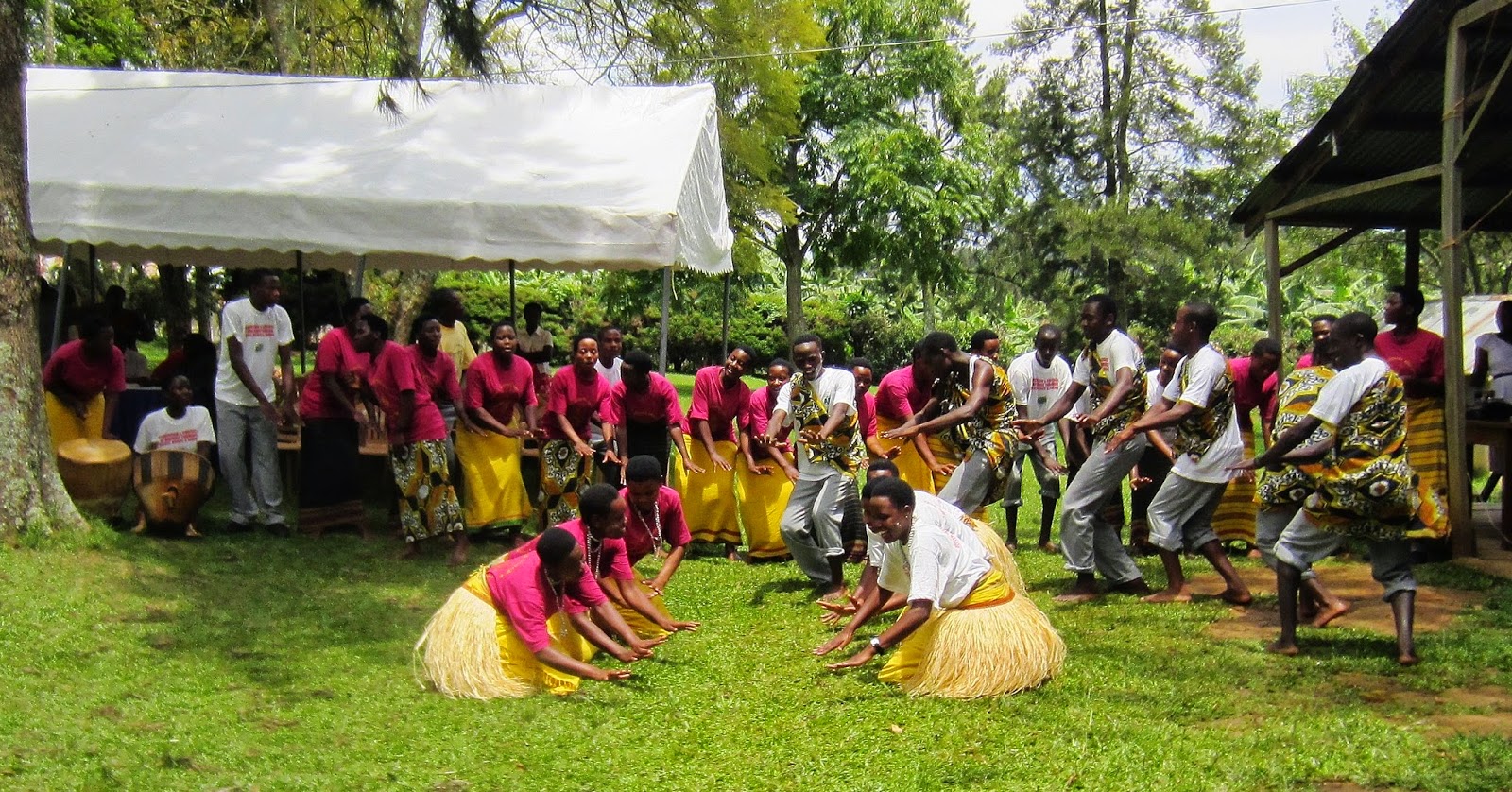


After the Music, Dance, and Drama presentation, the rules
were explained and the pupils divided into two groups for a preliminary round.
The schools, parents, pupils, and judges, a mix of teachers, tutors, and local
language experts, were more excited and involved in the competition than I ever
could have dreamed.


The children repeated words they were given silently to themselves, looks of concentration on their faces as they decided exactly how many a’s were in the middle of the word okutaaha before starting to spell. The parents and teachers actually mouthed the letters along with their pupils, giving satisfied nods and triumphant looks as their child decided that there were, in fact, two a’s. The judges smiled as they gestured successful pupils on to the next round and consulted their word lists and dictionaries seriously and often. I was struck by how much this could easily resemble a scene at a similar event anywhere around the world. An hour later, the arrival of the kitchen staff bearing giant pots of matooke and beans on their heads shattered this illusion somewhat. At the lunch break, 15 pupils were left to continue on to the final round after eating. And man, could these kids eat!

The children repeated words they were given silently to themselves, looks of concentration on their faces as they decided exactly how many a’s were in the middle of the word okutaaha before starting to spell. The parents and teachers actually mouthed the letters along with their pupils, giving satisfied nods and triumphant looks as their child decided that there were, in fact, two a’s. The judges smiled as they gestured successful pupils on to the next round and consulted their word lists and dictionaries seriously and often. I was struck by how much this could easily resemble a scene at a similar event anywhere around the world. An hour later, the arrival of the kitchen staff bearing giant pots of matooke and beans on their heads shattered this illusion somewhat. At the lunch break, 15 pupils were left to continue on to the final round after eating. And man, could these kids eat!


The pupils clamored in front of the serving tables for their
favorites, which they so rarely get – matooke, g-nut sauce, rice, beef, "soup",
and soda. Once everyone had consumed plates of food larger than their heads (the
Ugandan appetite is truly remarkable), tables were placed in the middle of the
two tents, the much duct-taped and only rarely on fire sound system was
switched on, and the last 15 competitors, after an impromptu dance party while the judges were preparing. lined up for a
series of much more difficult words.


Teachers scribbled furiously on their copies of the word lists as the children tackled words like amashémererwa, omunyongororwa, and ekiharáàni.
Teachers scribbled furiously on their copies of the word lists as the children tackled words like amashémererwa, omunyongororwa, and ekiharáàni.


Soon, only two pupils were left and as competitor number 9
correctly spelled the word competitor number 2 had missed, the audience burst
into applause. Gilbert, aka number 9, was swept into the arms of his teacher
and handed over to the MC, who proudly declared him the winner of the first
ever My Language Spelling Bee for Runyankore/Rukiga and therefore the recipient of an
all-expenses paid trip to Kampala, the capital of Uganda, along with his
teacher and parents.


The competition wrapped up as certificates were awarded, hands were shaken, and books in Runyankore were given to the 1st, 2nd, and 3rd place pupils. As Codie, Paul, and I took down the MLSB banner in front of the now empty tents, we couldn’t stop grinning. We had spent the whole day surrounded by excited and eager children and adults whose enthusiasm for spelling, reading, and writing surpassed anything we’ve ever seen here before. As we headed back to the house for a debriefing and well-deserved relaxation, we reminisced over our favorite moments – children clapping, smiling, and laughing during the traditional songs and dances; a parent confidently quizzing his son while they waited for the competition to begin; a headmaster with a big goofy grin waving his arms in triumph across the tent as his pupil correctly spelled an especially difficult word; a judge gently asking if a competitor understood a word and beaming when he received an affirmative answer; a group of pupils muttering letters under their breath as they watched the final children compete; a teacher making copious notes about every word for next year’s competition.
It was a day that I will never forget, a day where I began to truly understand that we are just here to plant the seed of literacy in Uganda ’s fertile soil. Her people have asked it and her people will sow it. They are ready, they are capable, and they are remarkable.

To learn to read is to light a fire; every syllable that is
spelled out is a spark.
—Victor Hugo


