“If you have sorted out the world in one language, it becomes much
easier to sort it out in a second language.” – Pauline Gibbons
Language and literacy are fascinating. What a wealth of
knowledge, history, and culture that lives within just one tongue. What incredible
universes the written word has opened up to us. They are glimpses into the
human mind, snatches of the magic and power we have inside of ourselves. They
are the cornerstones of the world we have built.
In college, I was introduced to a profession where my
passion for language and literacy was combined – teaching English as a Second
Language. The English language is an intricate puzzle that, when unlocked, can
open to life-changing opportunities and insights, and few things bring me
greater joy than to work on that puzzle with others. But as much as I love
English, as much as I delight in sharing in it and despairing of it with
others, I also realize how much the world would lose if every thought
originated only in English.
English is not meant to be a replacement, a bulldozer razing
indigenous languages and cultures; instead, it is meant to be used as a tool, a
tool to make connections and exchange knowledge. This is not always the message
that is communicated and, unfortunately, centuries of colonialism have wrongly
placed it as oftentimes higher, more valuable, more desirable than one’s own
mother tongue.
This colonial hangover is present even today in Uganda . Despite
a switch to education solely in local language from Primary 1 to Primary 3, with
Primary 4 being the “transition year” to instruction in English from Primary 5
to Primary 7, there is no denying that English is the language of opportunity
here; whether someone is looking for a professional job abroad or in country,
being able to speak English is a must. However, this attitude has led to a
devaluation of native languages and a misunderstanding of how best to achieve
fluency in a second language. Such unfortunate devaluation can be seen in the following
words of one Ugandan:
“Children … should learn a language which helps them in the
future. Not put them in brackets of a second community.”
Rural parents and community members often believe that such
a language policy, attempting to ensure that a child learns in their native
language in at least the first three grades, has been imposed for political
reasons; they are frustrated because they want their children to master the
language of wider communication, English, as quickly as possible. Some even
mistakenly think that African languages are not able to deal with scientific
and technical concepts. To them, a local language policy seems like a step
backward to the past, not forward to the future. This is detrimental because,
as any Peace Corps Volunteer knows, if a community does not embrace an idea, it
will not happen.
But many in the Ugandan community, especially the rural
community, are not embracing this step because they have not been informed of
the pedagogical advantages afforded their children when they are they are
instructed in their first language before moving on to being educated in
English. It can seem contradictory, but the more time children spend learning
in local language, the better they will perform academically and the more
fluent they will become in their second language. For example, first language
speakers of Afrikaans in South Africa, in places where English is taught only
as a subject for one lesson per day, have been shown to successfully achieve
high levels of bilingual proficiency in both Afrikaans and English – not being instructed
in English was in no way detrimental.
If parents want their children to learn the language of
wider communication, in this case English, it will take these pupils six to
eight years of learning English before it can be successfully used as the medium
of instruction for academic concepts. If this process is hurried, the pupil
will learn neither the new language nor academic content well enough. Imagine
trying to learn physics or study classic French novels with only your three
years of high school French!
When it comes down to it, if a pupil is not literate in
their first language, it is incredibly difficult for them to become literate in
a second language. Literacy, in both first and second languages, is immensely
important to individuals and to countries as a whole. It has been found, using
panel data for forty-four African countries, that literacy was among the
variables with a positive effect on GDP per capita growth. Literacy skills are
fundamental to informed decision-making, critical reflection, personal
empowerment, creativity, and participation in political, social, and cultural
spheres. Furthermore, while it’s hard to separate the benefits of literacy from
education, schooling, and knowledge overall, it has been shown that literacy
among women improves livelihoods and leads to better child and maternal health
in addition to empowering those women to gain access to and challenge male
domains. The Reading Agency has even shown that reading for enjoyment can
increase empathy, improve relationships, reduce symptoms of depression and raise
wellbeing!
However, first-language literacy and literacy in general face particular challenges in Uganda .
There are 63 main languages spoken, none with a large enough majority for one
to be selected as the national language. 52% of Uganda ’s 36 million people are
children below the age of 15, and 71% are not finishing primary school in time.
This is caused by, among other reasons, low competence, low literacy rates, and
lack of interest. In fact, Uganda
is ranked lowest in the region in literacy according to a 2012 Uwezo report.
These are problems that many Ugandans are well aware of and
something that two amazing Ugandans in particular decided to do something
about. Peter Mugogo and Aaron Kirunda, the founders of their own business based
in Kampala ,
decided that establishing their own microfinance company was not giving back
enough to their community. They passionately believe that Uganda ’s future belongs to that 52% below 15,
and they realized that the literacy rate needed to be improved, academic
achievement celebrated, and key life skills developed in these children in
order to ensure that they were motivated to stay in school and ensure a bright
future for Uganda .
So, three years ago, they started Enjuba Spelling Bee, an English spelling
competition for teams of three in Primary 4 through Primary 7.

Aaron and Peter
One year ago, Peace Corps Volunteers Loren Evans and Jason
Economou made their own realizations. For the literacy rate both in pupils’
local languages and in English to improve, communities had to embrace the
government’s local language education policy for Primary 1 to Primary 3 and
possibly even a future extension of it to Primary 5 or Primary 7. This meant
boosting the status of indigenous languages, developing the orthography of
languages if necessary, providing teachers with professional development, and
increasing the amount of available written materials in local languages. Thus,
the My Language Spelling Bee, a local language competition for Primary 3 pupils
which I wrote about last year, was born.
This year, as one of the National Co-Directors, I have had
the incredible privilege of being able to witness the birth of what I and my
Co-Director, Ben Ferraro, truly believe is a model Peace Corps partnership with
dedicated, hardworking, and passionate Ugandans.

My Co-Director, Ben, working on the My Language Spelling Bee in Arua district.
Enjuba Spelling Bee and My
Language Spelling Bee, along with the Ministry of Education and Sports, have
joined together to create Uganda Spelling Bee, offering in-service teacher
trainings, a P3 local language spelling competition, and a P4 – P7 English
spelling competition across Uganda. We believe that this national initiative,
besides just being incredibly fun, will help primary school pupils and their
school communities understand the importance of both first and second language
literacy. This awareness and these competitions will, hopefully, in turn,
increase literacy rates by training teachers in learner-centered literacy
instructional techniques and by helping pupils learn key life skills, ignite their
curiosity, become inspired to stay in school longer, and develop pride in their
mother tongue as well as improved competences in English. It’s a lot to put on
one project, but if anyone can do it, Peter, Aaron, and their team of highly-educated,
caring Ugandan volunteers can do it.

Michael and Juliet, two more volunteers from Enjuba Spelling Bee

This month has been the beginning of the culmination of a
year’s work for Uganda Spelling Bee. Recently, the Runyankore/Rukiga My
Language Spelling Bee finals and English Spelling Bee semi-finals were held at
the Primary Teacher’s College where Kris and I live. The response, excitement,
and anticipation of this year’s events by the community were overwhelming. Our
reach was much greater than last year due to the new partnership and due to the
fact that ownership of this project has been almost entirely taken on by
wonderful community partners in Bushenyi district, partners such as Mugisha
Laban, who have embraced Uganda Spelling Bee and taken it far past where I ever
thought it could go. In-service teacher trainings revolving around spelling bee
practices and learner-centered teaching techniques were held during the second
school term and school, district, and regional-level competitions, run almost
entirely by Ugandans, proceeded from there. The Runyankore/Rukiga My Language
Spelling Bee alone reached over 10,000 pupils, 275 teachers, and 190 schools in
the Southwest overall – and that’s just one of the six language regions Uganda
Spelling Bee is currently operating in.
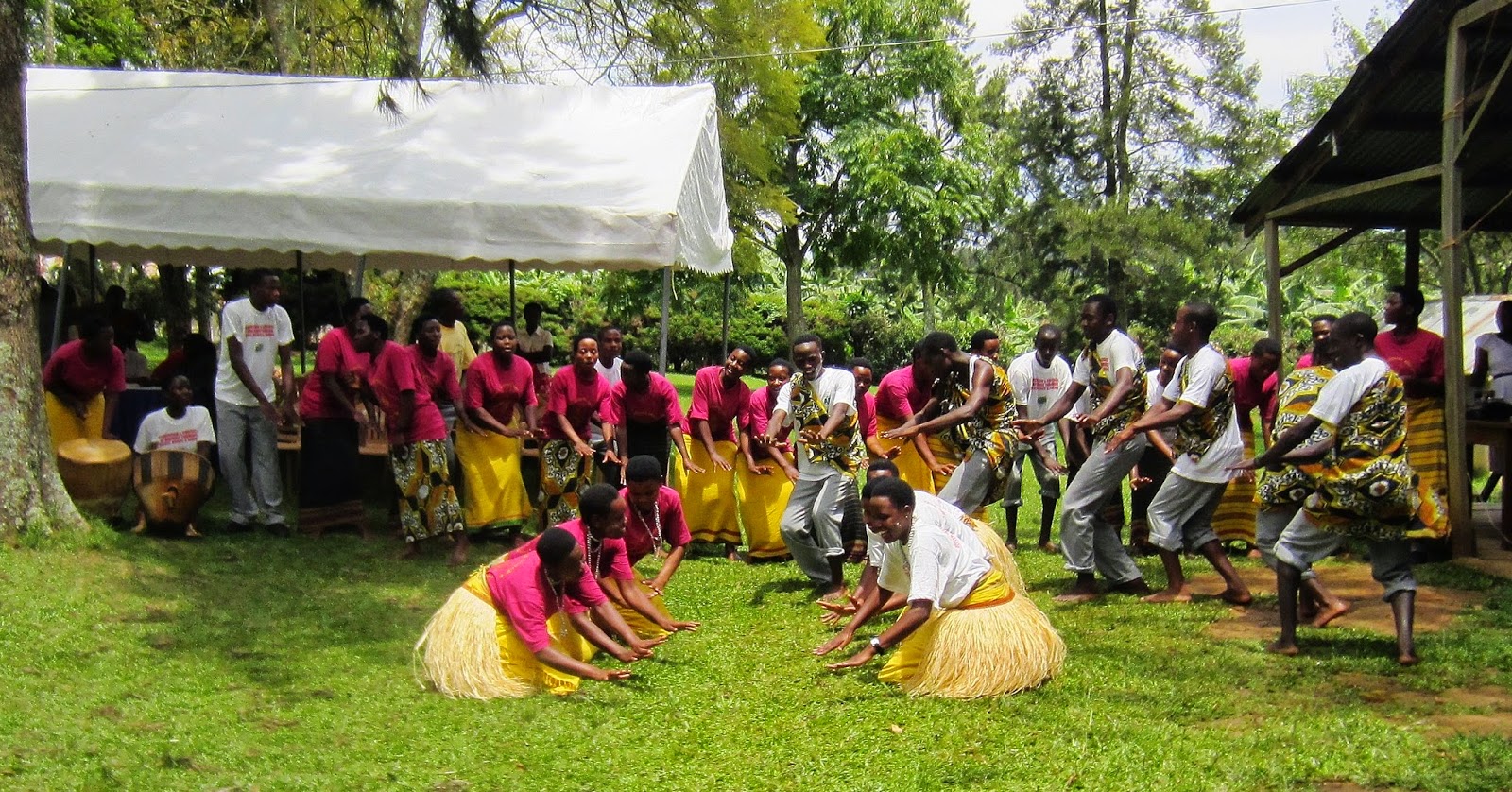
The day of the competition was filled with music, word
lists, and excited pupils practicing under the shade of nearby trees.


Paul Benz, the Music Man!

Kris and Immaculate enjoying the entertainment.


The Deputy Principal of the college opened the event by speaking of the importance of local language literacy and the role it plays in achieving second language competence. He urged teachers to continue the learner-centered literacy practices they had learned and praised the event as a project that supported the celebration of academic excellence and that now belonged to the community itself.
The preliminaries for My Language Spelling Bee and the
English Spelling Bee were held side by side, with brief musical interludes,
before lunch.


The English Spelling Bee pupils were a bit shy and nervous at first, so the judges had the pupils take their spots and quiz their teachers!

This adorable 8-year-old pupil did a great job in the My Language Spelling Bee.

The MLSB judges conferring.


A small break before lunch.

The college students and scouts helped us serve.

Olivia, my P3 pupil.
After lunch, all attending watched the My Language Spelling
Bee finals, with pupils spelling words like omuhingánzima
and ekiteetéèyi, until only one child
remained.

Then came the English Spelling Bee finals, with the primary
school pupils impressing all of the adults present by tackling words such as endogenous, paradigm, and xenolith.

Everyone, of course, received certificates and the top three
My Language Spelling Bee finishers received donated books, games, world maps,
and academic supplies for themselves and their schools.


Laban closing the ceremony.

The winning pupils from my school.

The Southwest Uganda Spelling Bee team! Minus Robert Hahn, that is.

Letting off a little steam after a long day.
The top three English Spelling Bee teams now move on to the
National Championship in Uganda’s capital, Kampala, on October 17th
- an exciting prize in and of itself for the public school children, especially
since some have never been outside of their own district or ridden a bus
before. It’s going to be an extremely exciting event, and I invite all of you
to be a part of it by liking Uganda Spelling Bee on Facebook and Twitter.
Please, follow along and give these amazing pupils your moral support on their big day!
Twitter: https://twitter.com/spellingbeeug
Website: http://www.spellingbee.ug/

References